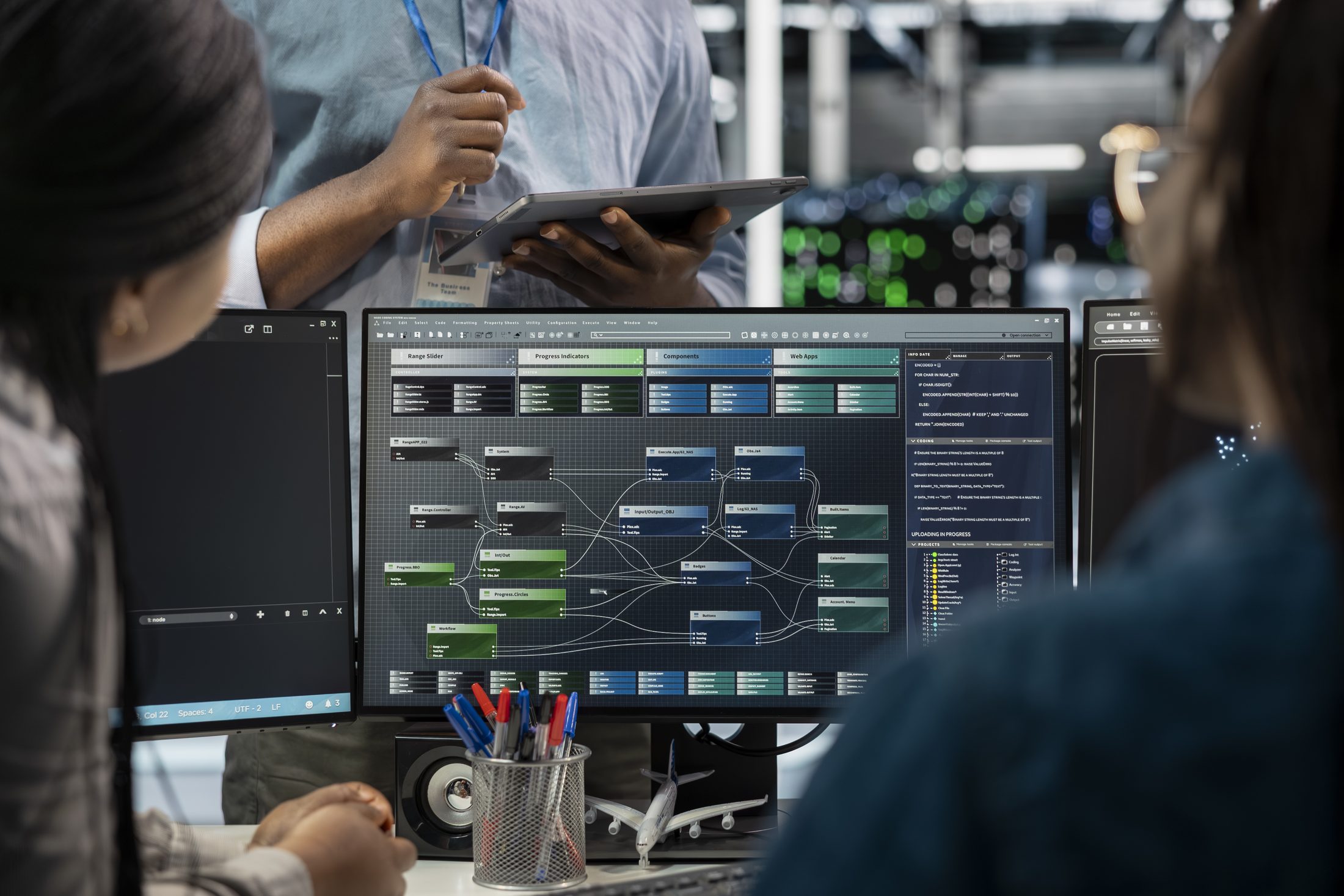
Digital transformation has become a top priority for businesses, public institutions, and organizations of every size. Digital tools now play a central role in managing operations, sharing information, tracking activity, and supporting decision-making.
Business performance often starts with the quality of the tools behind it
Yet many organizations still rely on standard software that only partially meets their needs. Teams end up adapting their way of working to the limitations of the tools they use, instead of having solutions that naturally fit their processes.
This mismatch often leads to repetitive tasks, duplicate data entry, limited information flow between departments, and lost time that gradually weighs on productivity. As the business grows, these limitations become more visible and can slow down the organization's progress.
In this context, having software built around an organization's actual processes is no longer just a technology question — it's a driver of performance, coordination, and the ability to grow.
When tools hold back processes instead of supporting them
In many organizations, the software used day to day was chosen because it was readily available, widely used, or quick to deploy. But generic software is designed to cover common needs and can't always account for the specifics of an organization, its industry, or how it operates.
That's usually when problems start to appear. Teams juggle parallel files, re-enter the same information across multiple systems, work around missing features, or keep manual processes in place to compensate for the limits of their tools. Data struggles to flow between departments, errors multiply, and processing times stretch out.
These issues aren't always recognized as a technology problem. They can be seen as work habits, operational constraints, or simply the growing pains of a business. In reality, they often point to a gap between the organization's processes and the tools meant to support them.
As the organization grows, this gap can become increasingly costly. It lowers team productivity, complicates operational tracking, limits automation opportunities, and slows down decision-making.
Building tools around processes, not the other way around
Several approaches can address these challenges. An organization can optimize the tools it already uses, integrate different applications to make data exchange easier, or develop a custom solution when existing options fall short.
The first step is understanding the organization's processes, its users' needs, and the day-to-day challenges they face. This analysis helps identify which tasks can be automated, which data needs to be centralized, and which systems need to communicate with one another.
The goal isn't necessarily to replace every existing tool. It's about building a coherent digital environment where different solutions can work together and meet the organization's operational requirements.
A well-designed solution also needs to be able to evolve. A business's needs change along with its activity, teams, customers, and constraints. Digital tools should support this evolution without creating new disruptions in the process.
This is where an approach combining functional analysis, software development, and systems integration can respond more precisely to each organization's reality.
Solutions tailored to each organization's needs
ALIBORA supports businesses, institutions, and public administrations in designing and integrating software solutions tailored to their needs.
Our work covers functional analysis, software development, and IT systems integration. The solutions we build can take the form of web and mobile applications, management platforms, or business tools designed for specific needs.
Integration also connects different applications and technologies, making it easier for information to flow between systems and strengthening operational continuity.
This approach focuses on building solutions that are scalable, secure, and aligned with the organization's processes — rather than imposing a one-size-fits-all model.
Benefits that go beyond technical performance
A well-suited software solution can have a direct impact on how an organization runs.
Automating repetitive tasks reduces time spent on manual operations and frees up teams to focus on higher-value work.
System integration makes it easier for data to flow between departments, reduces duplicate entry, and helps lower the risk of errors.
Centralizing and improving the reliability of information also provides better visibility into operations, supporting both monitoring and decision-making.
Finally, solutions designed to evolve alongside the organization make it easier to support growth, add new services, and adapt to changing needs — without having to rethink the entire information system.
Making digital technology a true performance driver
The choice of software shouldn't be based solely on cost, popularity, or ease of deployment. It should first and foremost reflect the organization's goals, constraints, and processes.
A truly well-suited solution makes better use of data, improves operational efficiency, and creates the conditions for sustainable growth.
Digital transformation depends as much on technology as it does on truly understanding the business realities that technology needs to address.
Looking to digitalize a process, integrate multiple systems, or develop a software solution tailored to your business? The ALIBORA team is ready to discuss your project and help identify the most relevant solutions for your organization.
Key takeaways
- Generic software covers common needs, not the specifics of your organization
- Duplicate entry, workarounds and manual steps are symptoms of a process-tool gap
- Start by analysing processes and users before choosing or building anything
- A solution has to keep evolving with the business, not freeze it in place